Pothos Care Guide: Watering, Light, Soil, Propagation, and Yellow Leaves
Pothos care is forgiving, but the plant grows fuller and keeps stronger variegation when light, drainage, and watering work together. Use this guide to build a reliable indoor routine instead of following a rigid calendar.
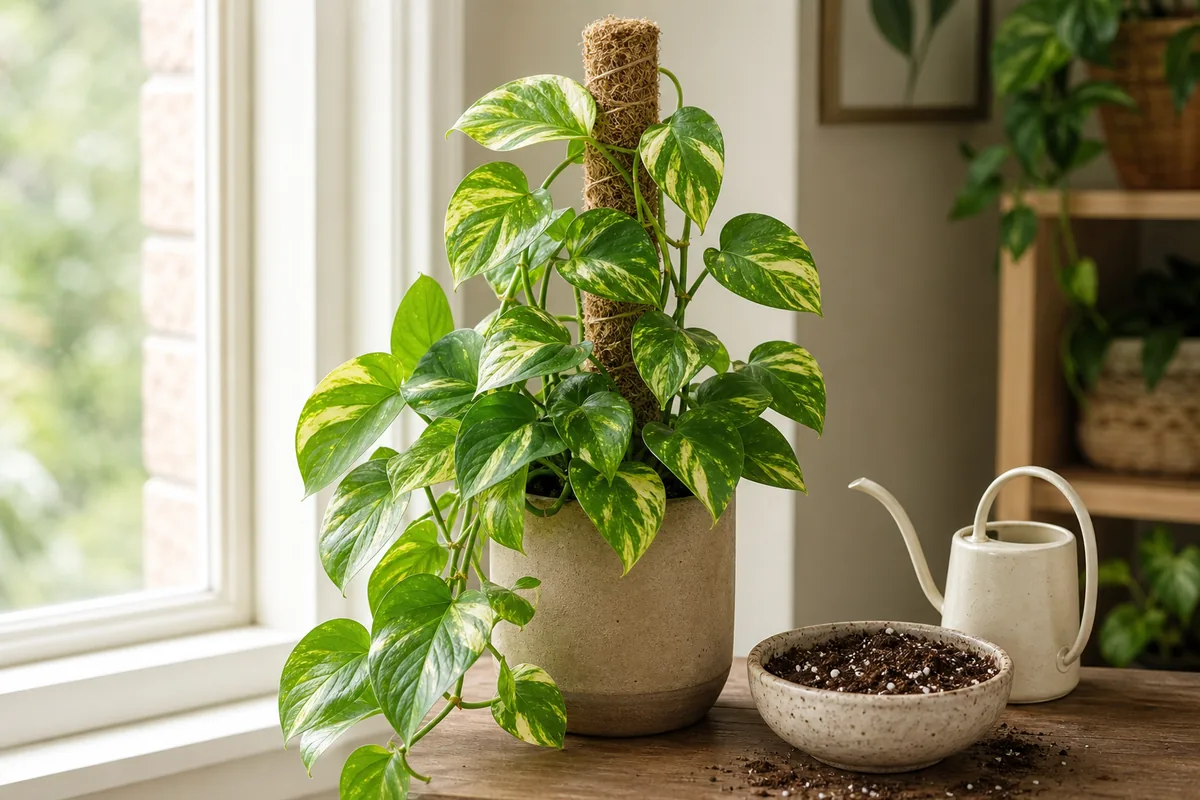
Pothos care at a glance
For reliable pothos care, place the plant in bright indirect light, use a pot with drainage and an airy houseplant mix, then water thoroughly only after the upper 1 to 2 inches of soil feel dry. Empty the saucer, keep the plant away from cold drafts, and feed lightly during active growth. Pothos tolerates lower light, but it drinks more slowly and may lose variegation there. Prune above a node for fuller growth, and root a healthy node cutting in water or moist mix. Check roots and soil before treating every yellow leaf as a fertilizer problem.
Indoor pothos care checklist
Read the plant, pot, and room together. Light changes how quickly the mix dries, so the same pothos may need a different routine in winter, after a move, or in a larger pot.
Light and placement
Look for
Long gaps between leaves, small new leaves, slow growth, or fading yellow and cream markings suggest insufficient light. Pale scorched patches point to harsh direct sun.
First action
Choose bright filtered light near a window. Move the plant gradually, and keep highly variegated cultivars brighter than solid-green forms without exposing them to hot midday sun.
Watering
Look for
Persistently wet soil, yellow lower leaves, fungus gnats, or soft stems suggest excess moisture. Curled leaves and a very light pot can indicate prolonged dryness.
First action
Test below the surface, water until excess drains, and wait until the upper 1 to 2 inches dry before watering again. Never leave the nursery pot standing in a full cachepot or saucer.
Soil and pot
Look for
Dense mix that stays wet for many days, sour odor, compacted roots, or water pooling on top makes every watering decision risky.
First action
Use a loose mix with quality potting soil plus bark, perlite, pumice, or coco chips. Choose a drainage hole and a pot only slightly wider than the root ball.
Temperature and humidity
Look for
Brown edges, stalled growth, or sudden leaf drop can follow heater air, air-conditioning, cold glass, or a sharp environmental change.
First action
Keep conditions comfortably warm and stable. Ordinary home humidity often works, while grouping plants or using a humidifier can help in very dry rooms.
Pruning and support
Look for
A vine with bare stretches, leaves only at the tips, or small leaves on a long trailing stem needs better light, pruning, or climbing support.
First action
Cut just above a node to encourage branching. Let vines trail, or guide aerial roots onto a moss pole or trellis for stronger upright growth and potentially larger leaves.
Pests and safety
Look for
Cottony clusters, sticky residue, scale bumps, webbing, or spreading black tissue require isolation and inspection. Chewed leaves create a separate child or pet concern.
First action
Inspect both leaf surfaces and stems, clean the plant, and identify a spreading problem before spraying. Keep pothos out of reach because eating it can irritate the mouth.
A 7-step pothos care routine
Use this order for a new plant, a neglected vine, or a pothos that stopped growing. It prevents the common mistake of changing water, fertilizer, and pot size all at once.
-
Confirm that it is pothos
Golden pothos has glossy heart-shaped leaves, grooved leaf stalks, and vines with aerial-root nodes. Heartleaf philodendron and satin pothos can look similar but are different plants. Compare the whole vine, petiole, leaf texture, and growth habit before applying species-specific advice.
-
Set light before setting a watering rhythm
A brighter pothos uses water faster and makes denser growth. In a darker position, let the mix dry farther and expect slower growth. Bright indirect light is the easiest target; direct afternoon sun can burn foliage.
-
Water by dryness, not weekday
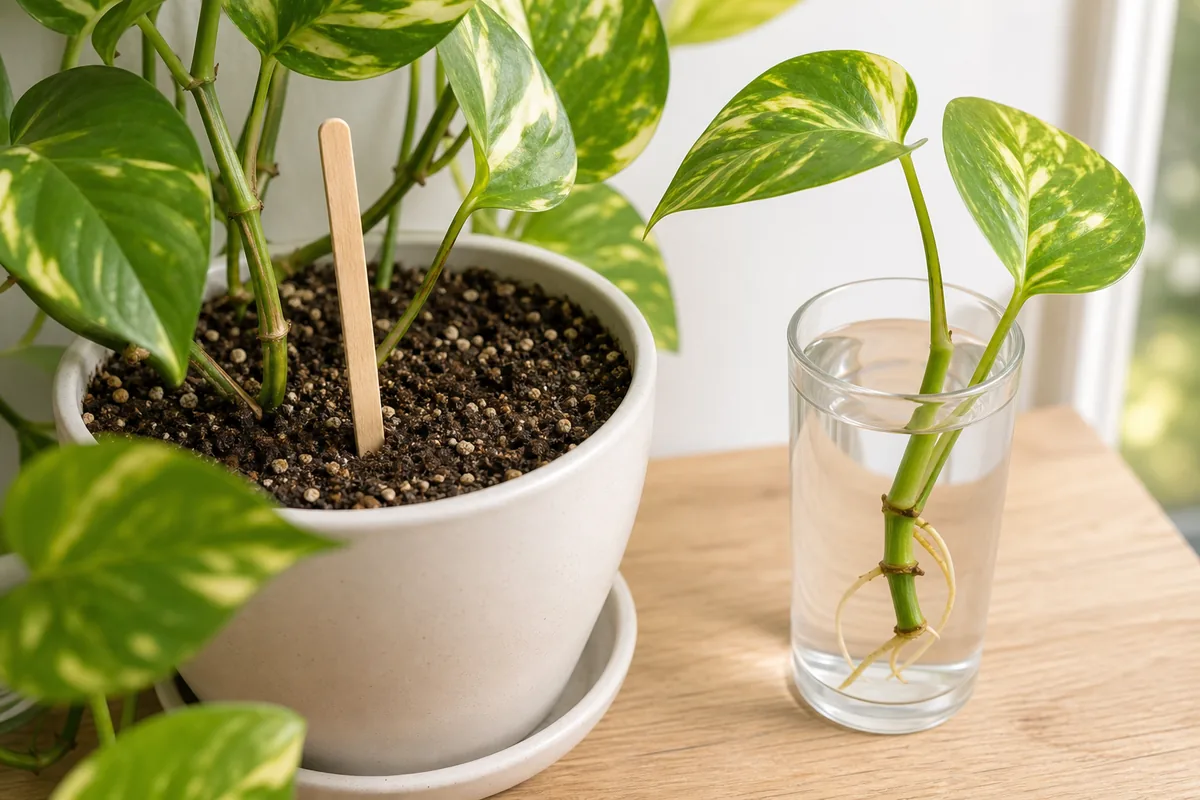
Push a finger or wooden stick 1 to 2 inches into the mix and lift the pot to learn its dry weight. When the upper layer is dry, soak the root ball evenly and let all excess water leave the drainage hole.
-
Build a breathable root zone
Pothos roots need both moisture and oxygen. A loose mix and a correctly sized pot reduce the chance that the center stays saturated after the surface looks dry. Repot when roots crowd the pot or the mix has collapsed, not merely because one leaf yellowed.
-
Feed and clean during active growth
Use a diluted balanced houseplant fertilizer during spring and summer when new leaves are forming. Reduce feeding in low light or winter. Wipe dusty leaves so they can use available light, and flush accumulated salts occasionally.
-
Choose trailing or climbing growth
Trim long bare vines for a fuller hanging plant, then place rooted cuttings back into the same pot. For climbing growth, secure stems loosely to a pole or trellis and guide nodes toward the support rather than tying leaf stalks tightly.
-
Propagate a node, not a leaf alone
Cut below a healthy node with one or two leaves, remove the lowest leaf, and place the node in clean water or moist airy mix. Give bright indirect light. Change cloudy water, and move a water-rooted cutting to soil once it has several established roots.
Common pothos problems and the first care check
| Pothos symptom | Check first | Avoid this mistake |
|---|---|---|
| Yellow lower leaves | Check deep soil moisture, drainage, root smell, light, and whether only one old leaf is aging. | Adding fertilizer before ruling out wet roots. |
| Brown crispy edges | Review long dry spells, hot sun, dry heater air, salt buildup, and whether the root ball repels water. | Misting daily while the pot remains bone dry or waterlogged. |
| Long bare or leggy vines | Increase indirect light, prune above healthy nodes, and root cuttings to refill the pot. | Overfeeding a plant that lacks usable light. |
| Variegation turns greener | Move gradually to brighter indirect light and judge the next few leaves. | Putting a shade-grown plant into strong direct sun in one day. |
| Black mushy stem or sour mix | Stop watering, inspect roots, remove rotten tissue, and repot firm healthy sections in fresh draining mix. | Taking cuttings from a soft or black node. |
| Cutting does not root | Confirm a node is submerged or touching mix, keep it warm and bright, and replace cloudy water. | Trying to propagate a leaf with no node. |
Pothos or philodendron? Identify before changing care
Golden pothos, heartleaf philodendron, satin pothos, and juvenile Monstera can be confused in a quick photo. Pothos usually has thicker waxy leaves, grooved petioles, and nodes with aerial-root nubs. A plant identifier can narrow the match, but include the whole vine, one clear leaf front, the leaf-stem connection, and a node. Confirming the plant prevents you from treating normal variety markings as disease or following the wrong propagation advice.
Not sure your vine is pothos?
Upload clear photos of the whole plant, a leaf, and a stem node to compare likely matches before changing the pot or watering routine.
Identify Your Plant