Monstera Plant Care: Light, Water, Soil, Support, and Leaf Fixes
A practical guide for keeping Monstera deliciosa healthy indoors. Start with bright indirect light, a chunky draining mix, careful watering, and support for climbing growth before you chase quick fixes for yellow leaves or brown tips.
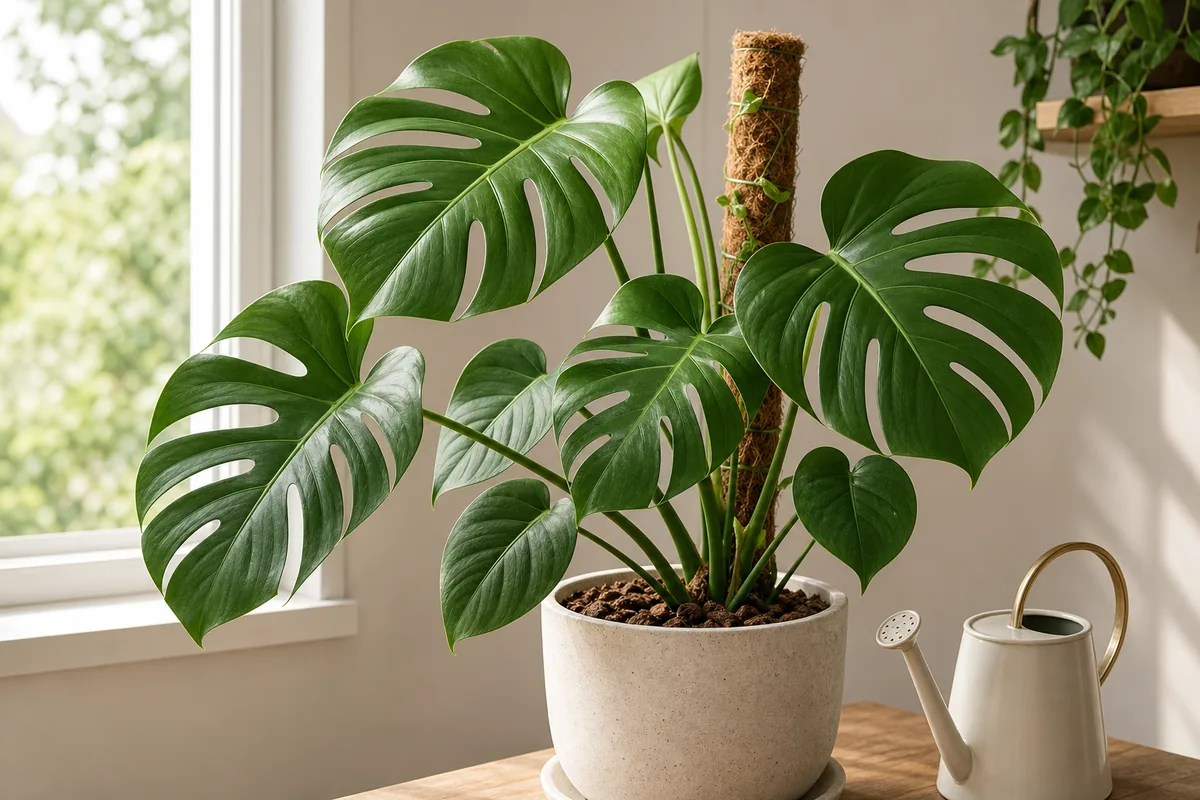
Quick answer
Monstera plant care is easiest when the plant gets bright indirect light, a pot with drainage, an airy aroid mix, and water only after the upper soil has partly dried. Give the vine a moss pole or sturdy support, wipe dusty leaves, and rotate the pot for balanced growth. Yellow leaves usually point to watering, drainage, or light stress; brown edges often come from dry air, inconsistent watering, salts, or harsh sun. Make one change at a time and judge the result by new growth, not by old damaged leaves.
Monstera care checklist
Use this checklist before changing your watering schedule or repotting. Most Monstera problems come from a mismatch between light, roots, potting mix, and season.
Light
Look for
Small leaves, long spaces between nodes, leaning toward a window, or pale new growth mean the plant may need more light. Bleached patches or dry scorched spots suggest direct sun was too harsh.
First action
Choose bright indirect light near an east window or filtered south/west light. Move gradually so older leaves do not scorch.
Water
Look for
Limp stems, yellow lower leaves, fungus gnats, or sour soil point to wet roots. Crispy edges and curled leaves can appear when the plant stays dry too long.
First action
Water thoroughly, let excess drain, and wait until the top 2 to 3 inches of mix feel dry before watering again.
Soil and pot
Look for
Dense peat that stays wet, water sitting in the saucer, roots circling tightly, or a pot with no drainage makes watering advice unreliable.
First action
Use a chunky aroid mix with bark, perlite, coco chips, or pumice, and keep the pot only slightly larger than the root ball.
Humidity and temperature
Look for
Brown tips, curled edges, and stalled leaves can follow dry air, heater drafts, cold windows, or sudden temperature swings.
First action
Keep Monstera away from vents and cold glass. Normal home humidity can work, but steady warmth and grouped plants help.
Support and pruning
Look for
Heavy stems falling outward, aerial roots searching, or leaves staying small can mean the plant has no climbing support.
First action
Tie stems loosely to a moss pole, coir pole, or trellis. Prune above a node when shaping or taking a cutting.
Pests and leaf spots
Look for
Sticky residue, speckling, webbing, bumps on stems, spreading brown spots, or yellow halos need closer inspection.
First action
Isolate the plant, check leaf undersides, clean foliage, and use the plant disease detector if the pattern is spreading.
A 7-step Monstera care routine
Follow this order when you bring home a Monstera, revive a neglected plant, or adjust care after identifying the plant from a photo.
-
Confirm the plant and growth stage
Monstera deliciosa, young Monstera plants, and lookalikes can need different expectations. Juvenile plants may not show dramatic splits yet, so compare leaf shape, stem habit, and aerial roots before assuming care is wrong.
-
Set the light first
Light controls how quickly the plant drinks and how large new leaves can become. Bright indirect light is the target; a dark corner usually causes slow growth, while sudden direct afternoon sun can scorch leaves.
-
Water by soil dryness
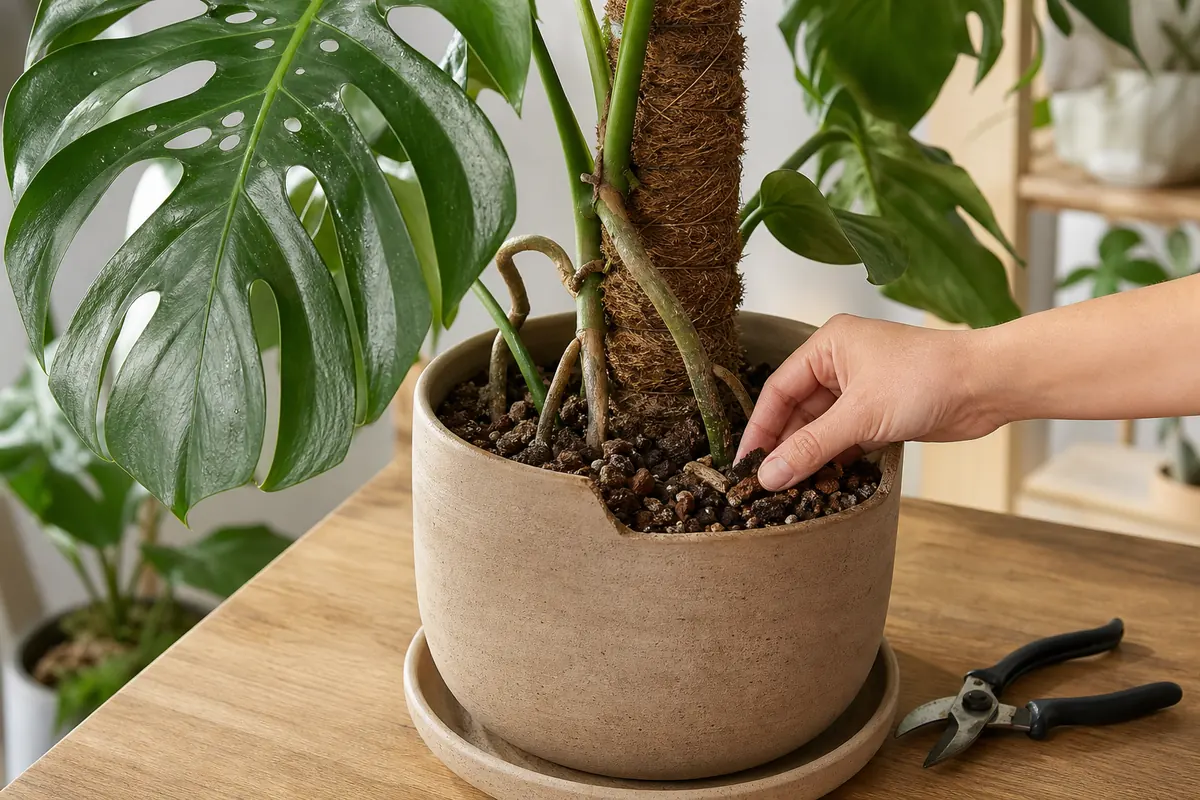
Do not water on a fixed calendar. Push a finger or wooden stick into the mix, lift the pot, and check drainage. Water deeply when the upper layer has dried, then empty the saucer.
-
Use an airy aroid mix
Monstera roots need oxygen. A mix with bark and mineral aeration lets you water thoroughly without leaving the root zone soggy for days.
-
Train the vine upward
A Monstera is a climbing plant. A stable pole helps stems grow upright, supports larger leaves, and keeps aerial roots from sprawling across the room.
-
Feed lightly during active growth
Use diluted balanced fertilizer in spring and summer if the plant is producing new leaves. Skip heavy feeding in low light or winter conditions.
-
Inspect before cutting or repotting
Remove dead or badly damaged leaves, but do not repot or prune heavily during stress unless roots, pests, or rot make it necessary.
Common Monstera problems and what to do first
| Monstera situation | Care priority | Avoid this mistake |
|---|---|---|
| Yellow lower leaf | Check soil moisture, drainage, old leaf age, and light before changing fertilizer. | Assuming every yellow leaf means the plant needs food. |
| Brown crispy tips | Review watering consistency, dry air, salt buildup, direct sun, and heater drafts. | Cutting tips only and leaving the cause unchanged. |
| Small leaves with few splits | Improve bright indirect light and give climbing support; mature leaves split more reliably than juvenile leaves. | Overwatering to force faster growth. |
| Aerial roots everywhere | Guide them toward a pole, potting mix, or gentle trim if they are in the way. | Removing all aerial roots from a stressed plant. |
| Black mushy stem or sour soil | Stop watering, inspect roots, remove rot, and repot into a draining mix if needed. | Adding more water or fertilizer to a possible root rot problem. |
How plant identification helps Monstera care
Many care mistakes start with the wrong plant name. A split-leaf philodendron, pothos, Rhaphidophora, or young Monstera can look similar in a quick photo. Use the plant identifier when the label is missing, then compare the result with leaf shape, nodes, growth habit, and aerial roots. Once the ID is plausible, this Monstera care routine gives a focused next step instead of generic houseplant advice.
Not sure it is a Monstera?
Upload a clear photo of the leaves, stem, and pot to get likely plant matches before you change light, water, soil, or support.
Identify Your Plant