What's Wrong With My Plant? A Practical Symptom Checker
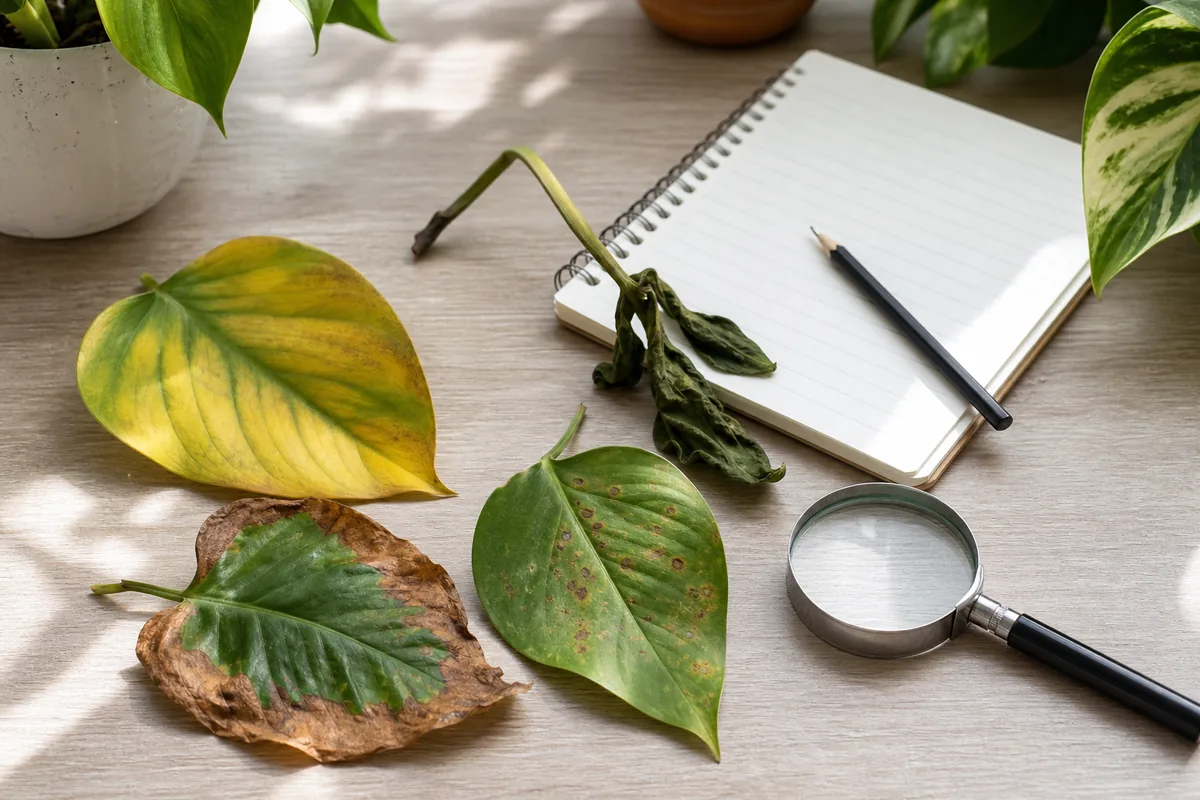
When a plant suddenly has yellow leaves, brown tips, soft stems, spots, or curling edges, the first job is not to guess a disease name. Start by reading the symptom pattern, checking the growing conditions, and deciding whether a photo-based plant disease detector can help narrow the next step.
Quick answer
Most plant problems come from overlapping causes: watering that is too frequent or too sparse, low light, sudden heat or cold, dry indoor air, fertilizer salt buildup, pests, or a true leaf disease. Check soil moisture, light, airflow, leaf undersides, and whether the newest growth is healthy before treating. If spots spread, pests are visible, or the plant is valuable, use a clear photo check and confirm serious cases with a local extension service or qualified nursery.
Match the Symptom Before You Treat
The same plant can show similar damage from very different causes. Use the visible pattern to decide what to inspect next instead of applying fertilizer, pesticide, or extra water too soon.
Yellow leaves
Often points to water stress, low light, nutrient stress, normal aging, or root trouble. One old yellow leaf is less urgent than many leaves yellowing at once.
Check first
Feel the soil several centimeters down, confirm the pot drains, and compare older leaves with new growth.
Brown tips or crispy edges
Common with dry air, inconsistent watering, salt buildup, too much direct sun, heat near a window, or cold drafts.
Check first
Review watering rhythm, humidity, fertilizer history, and whether damage faces a bright window or vent.
Brown or black spots
Spots can come from fungal or bacterial disease, wet foliage, pest feeding, sun scorch, or physical damage.
Check first
Look for yellow halos, repeating spot patterns, wet leaves, webbing, sticky residue, and whether new spots keep appearing.
Wilting or limp stems
Wilting can mean dry roots, suffocated roots from overwatering, heat stress, transplant shock, or a serious root issue.
Check first
Check soil moisture before watering again; if the soil is wet and the plant is limp, inspect drainage and root health.
A Safe 5-Step Triage Routine
This order prevents the most common mistake: treating one visible leaf symptom before checking the care conditions that caused it.
-
1. Separate urgent from normal aging
A single lower leaf turning yellow can be normal. Fast spreading spots, many collapsing leaves, sticky residue, webbing, or mushy stems deserve faster action.
-
2. Check soil moisture before changing water
Push a finger or moisture probe into the root zone. Many plants look similar when they are too dry or too wet, so watering by appearance alone can make the problem worse.
-
3. Inspect both sides of the leaf
Look under leaves and along stems for fine webbing, tiny moving insects, scale bumps, honeydew, powdery growth, or clustered damage.
-
4. Review light, heat, drafts, and recent changes
A new window position, heater, air conditioner, repotting, fertilizer dose, or cold night can explain sudden damage without a contagious disease.
-
5. Photograph the pattern before pruning
Take one close-up and one whole-plant photo. This gives a plant disease detector or local expert enough context to separate disease, pests, and care stress.

Common Patterns and First Actions
Use low-risk actions first. Avoid strong chemical treatment until you have a clearer diagnosis.
| Visible pattern | Likely causes | Low-risk first action |
|---|---|---|
| Lower leaves yellow first | Natural aging, low light, overwatering, nitrogen stress, or root stress. | Remove fully yellow leaves, improve light gradually, and let the top soil dry appropriately before the next watering. |
| Crispy brown margins | Dry air, inconsistent watering, fertilizer salts, sun or heat stress, or draft exposure. | Flush the pot if salts are suspected, move away from vents, stabilize watering, and raise humidity for humidity-loving plants. |
| Round spots with halos | Leaf spot disease, wet foliage, poor airflow, or pest injury that became infected. | Remove badly affected leaves, avoid wetting foliage, isolate if spreading, and improve airflow. |
| Fine speckling or webbing | Spider mites, thrips, aphids, scale, or other pests. | Isolate the plant, rinse foliage, inspect repeatedly, and confirm pest type before choosing treatment. |
| Plant wilts while soil is wet | Poor drainage, root rot risk, compacted soil, or roots unable to breathe. | Stop watering temporarily, check drainage holes, and inspect roots if the plant continues to collapse. |
| Bleached patches on one side | Sun scorch or heat through glass, often after moving the plant. | Move to bright indirect light and wait for new growth; damaged tissue will not turn green again. |
How to Take a Better Problem Photo
A symptom photo is much more useful when it shows pattern, scale, and context. This helps both automated tools and human plant experts.
Use natural light
Avoid colored grow lights and heavy filters because yellowing, browning, and pale patches depend on accurate color.
Show healthy and damaged tissue
Include one healthy leaf near the damaged leaf when possible so the pattern is easier to compare.
Add a whole-plant view
A wide photo shows whether symptoms are limited to old leaves, new growth, one side, or the entire plant.
Keep the image sharp
Focus on spots, edges, insects, powder, or wilted stems. Blurry images often produce vague results.
Need a second read from a photo?
Use the Plant Disease Detector when symptoms are spreading, the pattern is unclear, or you want a structured result with visible clues, likely issue type, possible causes, and safer next steps.
Open Plant Disease DetectorWhen to Get Local Help
The problem spreads quickly
Rapidly expanding spots, collapsing stems, or multiple plants affected can justify local extension or nursery advice.
Food crops are involved
For vegetables, herbs, and fruiting plants, confirm disease and chemical decisions locally before using treatments.
The plant is valuable
Rare, expensive, old, or sentimental plants deserve a cautious diagnosis before major pruning or repotting.