Plant Care Guide: Light, Water, Soil, and Routine Checks
Turn a plant identification result into a simple care plan. This guide explains how to read light, watering, soil, humidity, fertilizer, pruning, pests, and repotting signals before changing your routine.
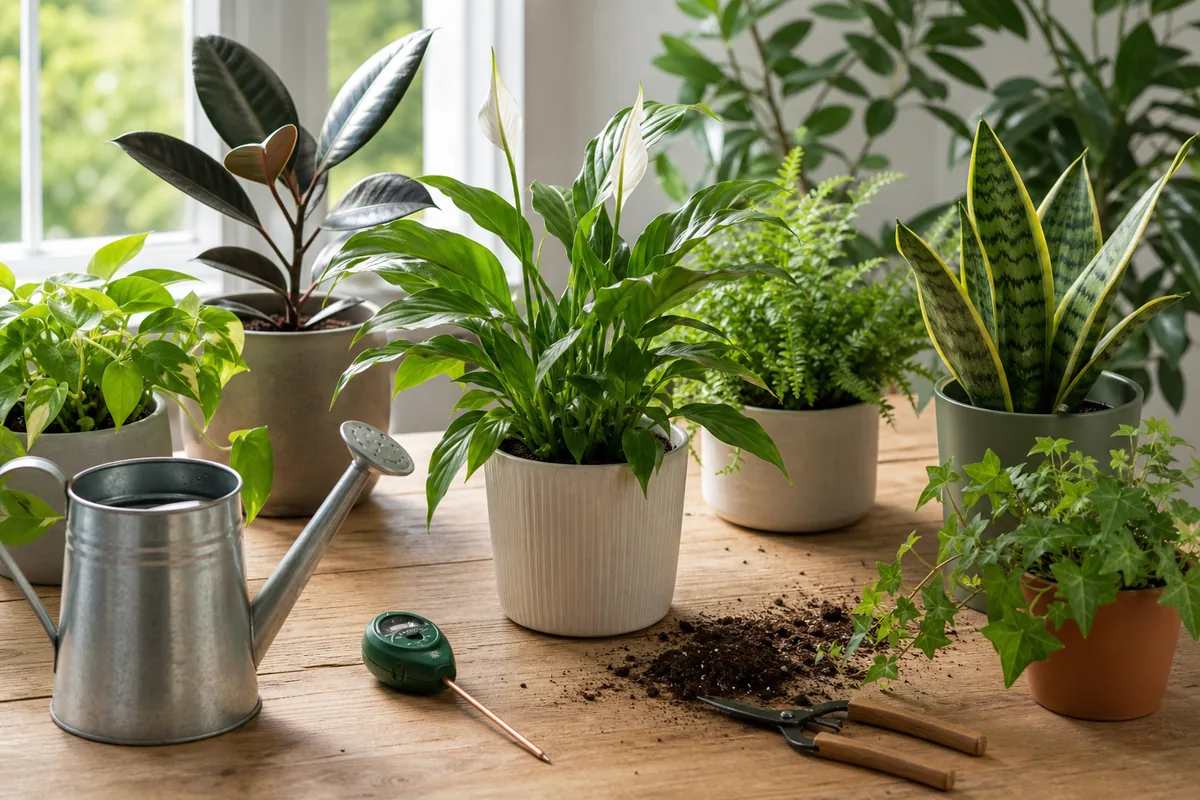
Quick answer
A reliable plant care routine starts with the plant name, then checks light, soil moisture, drainage, humidity, temperature, and seasonal growth. Do not water, fertilize, prune, or repot just because one leaf looks imperfect. Match the plant type to its environment, make one adjustment at a time, and watch new growth for two to four weeks.
Care Factor Checklist
Each factor changes how often the plant needs water, nutrients, pruning, and repotting. Check the environment before assuming the plant is sick.
Light
Look for
Leaves leaning toward a window, pale new growth, scorched patches, or long weak stems.
First action
Move gradually. Bright indirect light is safer for many indoor plants than sudden direct sun.
Water
Look for
Dry root ball, constantly wet soil, limp stems, yellow lower leaves, or crispy edges.
First action
Feel the soil below the surface and confirm drainage before changing the watering interval.
Soil and pot
Look for
Water running straight through, compacted mix, sour smell, roots circling the pot, or no drainage hole.
First action
Use a pot with drainage and a mix that matches the plant type instead of only changing watering.
Humidity and temperature
Look for
Brown tips, curled edges, leaf drop after drafts, or damage near heaters and air conditioners.
First action
Keep the plant away from vents and cold glass; group humidity-loving plants if air is very dry.
Fertilizer
Look for
Slow growth during active season, pale leaves, salt crust, or burned leaf tips after feeding.
First action
Feed lightly only during active growth and flush the pot if fertilizer salts are suspected.
Pests and disease
Look for
Sticky residue, webbing, speckling, bumps, spreading spots, or powdery growth.
First action
Isolate the plant, inspect leaf undersides, and use a plant problem photo check when the pattern is unclear.
A 7-Step Plant Care Routine
Use this order when you bring home a plant, identify an unknown houseplant, or troubleshoot slow growth. It keeps care decisions practical and prevents overcorrecting.
-
Confirm the plant type
Care advice depends on whether the plant is a succulent, tropical foliage plant, flowering plant, tree seedling, herb, or outdoor weed. If you are unsure, use the plant identifier first and compare the result with the leaf shape, stem, flower, and growth habit.
-
Match light before changing water
Many watering problems are actually light problems. A plant in low light uses water slowly, while a plant in bright warm conditions dries faster. Move plants gradually so leaves can adapt.
-
Water by soil condition, not a fixed calendar
A weekly reminder is only a starting point. Check the top layer and deeper root zone. Water thoroughly when the plant type and soil condition call for it, then let excess water drain away.
-
Choose soil and pot size for root health
Dense soil in an oversized pot stays wet too long. Tiny pots dry too fast. Repot only when roots, drainage, or soil structure justify it, not every time a plant drops an old leaf.
-
Feed during active growth
Most houseplants need less fertilizer than people expect. Use a diluted feed in spring and summer when the plant is actively growing, then reduce or stop during slow seasons.
-
Prune for health and shape
Remove dead, mushy, badly spotted, or pest-covered leaves. For shaping, prune above a node and avoid taking too much foliage from a stressed plant at once.
-
Review the routine every season
Light, humidity, and growth speed change through the year. A winter routine should often use less water and fertilizer than a bright summer routine.
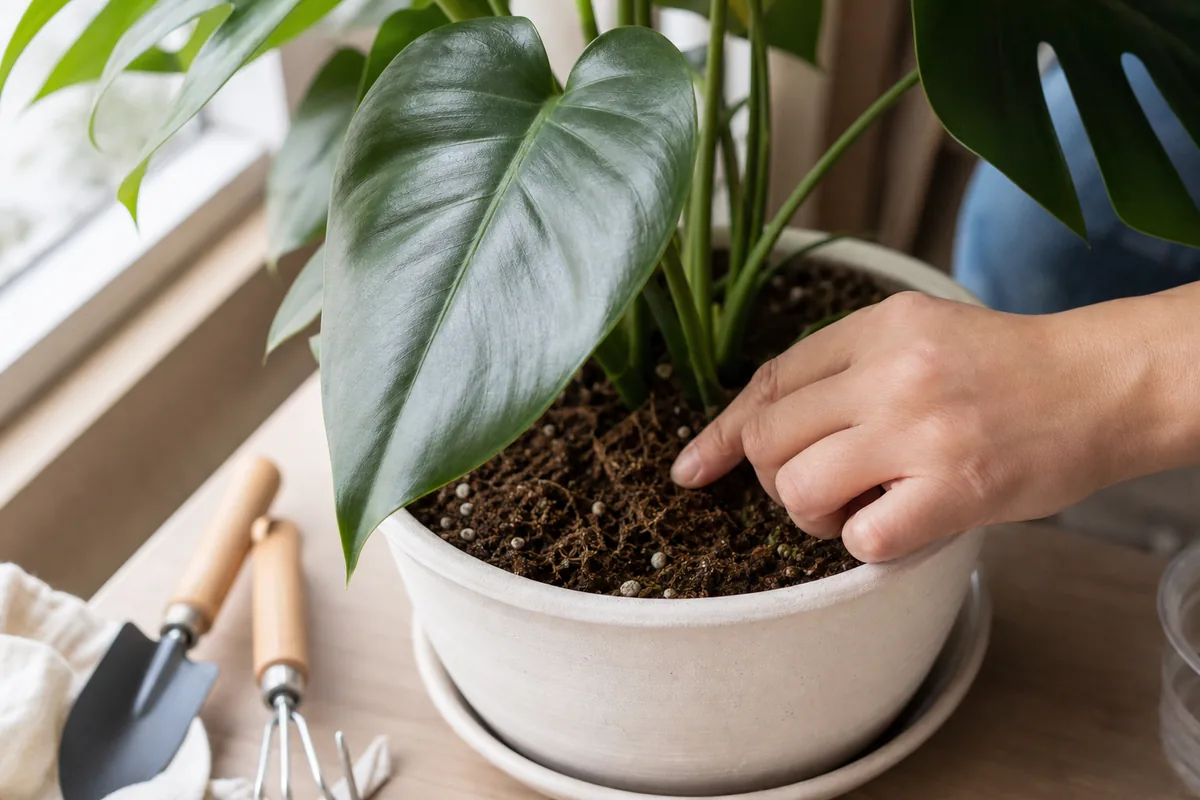
Care decisions by situation
| Plant situation | Care priority | Avoid this mistake |
|---|---|---|
| New unknown plant | Identify it, quarantine briefly, inspect leaves and soil, then choose light and water based on plant type. | Repotting, fertilizing, and heavy pruning on the first day. |
| Yellow lower leaves | Check soil moisture, drainage, light level, and whether only old leaves are affected. | Assuming every yellow leaf means nutrient deficiency. |
| Brown crispy tips | Review watering consistency, dry air, salts, heat, and direct sun exposure. | Cutting tips without fixing the dry air or salt buildup. |
| Slow growth | Check season, light, root space, and whether the plant naturally grows slowly. | Adding strong fertilizer to a plant that lacks light. |
| Spots or pests | Isolate, photograph the pattern, inspect undersides, and compare with the disease detector guide. | Spraying before confirming pest or disease type. |
How Plant Identification Improves Care Advice
A species match turns generic advice into a focused routine. Succulents usually need faster-draining soil and longer dry periods; many tropical foliage plants prefer steadier moisture and higher humidity; flowering plants often need stronger light to bloom. If the plant name is uncertain, use multiple clues instead of trusting one photo result blindly.
Need the plant name first?
Upload a clear plant photo to get likely species matches, common and scientific names, family, care basics, and lookalike notes before you build a care routine.
Open Plant Identifier