Snake Plant Care: Watering, Light, Soil, and Yellow Leaf Fixes
A practical indoor guide for Dracaena trifasciata, still often called Sansevieria or snake plant. Start with bright indirect light, a gritty draining mix, and careful watering before you treat yellow leaves, soft bases, or brown tips as separate problems.
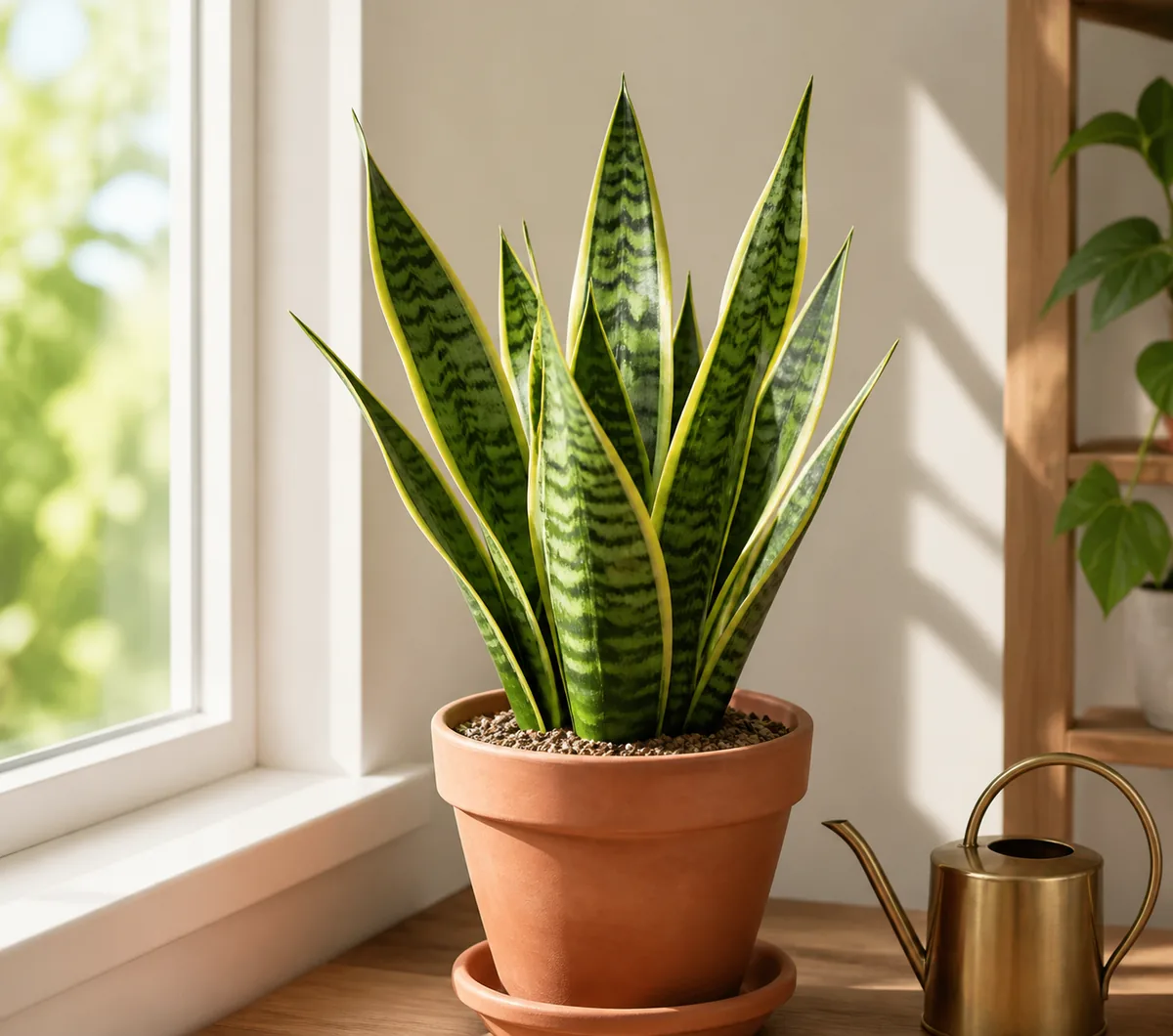
Quick answer
Snake plant care is easiest when the plant sits in bright indirect light, grows in a fast-draining cactus or succulent-style mix, and is watered only after the soil has dried well down into the pot. Low light can work, but growth slows and wet soil becomes riskier. Yellow leaves, soft bases, and a sour smell usually point toward overwatering or poor drainage; wrinkled leaves and curling can mean the plant stayed dry for too long. Check roots and soil before adding fertilizer, and keep the plant away from curious pets because snake plant is commonly listed as toxic to cats and dogs.
Snake plant care checklist
Use this checklist before changing several things at once. Snake plants are resilient, but the wrong potting mix and repeated small watering are the most common causes of decline.
Light
Look for
Slow growth, leaning leaves, or fading variegation often happen in very dim rooms. Scorched dry patches can follow sudden harsh direct sun.
First action
Place the plant in bright indirect light when possible. Low light is acceptable, but water less often and expect slower growth.
Water
Look for
Soft leaf bases, yellowing from the bottom, fungus gnats, or a sour soil smell suggest the roots are staying wet. Deep wrinkles suggest extended dryness.
First action
Water thoroughly, let excess drain, then wait until the mix is dry several inches down before watering again.
Soil and pot
Look for
Dense potting soil, no drainage hole, water in the saucer, or a pot much larger than the root ball makes rot more likely.
First action
Use a gritty cactus/succulent mix with perlite, pumice, or bark, and choose a snug pot with a drainage hole.
Temperature
Look for
Cold window glass, winter drafts, and heater blasts can cause stress marks, stalled growth, or soft damaged tissue.
First action
Keep snake plants in normal indoor warmth and away from cold drafts. Avoid placing wet soil in a cold corner.
Repotting and pups
Look for
Crowded roots, pups pushing against the pot, or soil that collapses and holds water are signs to refresh the setup.
First action
Repot in spring or active growth if possible. Divide pups with roots attached, and let cuts dry briefly before potting.
Pets and safety
Look for
Chewed leaves or pets showing drooling, vomiting, or unusual behavior need caution rather than a plant-care fix.
First action
Move the plant out of reach and contact a veterinarian or poison-control resource if a pet may have eaten it.
A 7-step snake plant care routine
Follow this order when you bring home a snake plant, revive a neglected pot, or check whether a plant is really Sansevieria/Dracaena before changing care.
-
Confirm the plant and variety
Snake plant is a common name used for several Dracaena/Sansevieria forms. Tall sword-like leaves, bird's-nest rosettes, and cylindrical forms can look different, so identify the plant before applying one-size-fits-all advice.
-
Choose light that matches your watering
Bright indirect light gives the easiest care window. If the plant is far from a window, keep it drier and do not expect fast new leaves.
-
Water deeply, not frequently
A light splash every few days keeps the top wet without flushing the pot. Instead, water thoroughly, empty the saucer, and wait until the root zone has dried.
-
Use a fast-draining mix
A gritty mix protects the thick rhizomes from sitting in stale moisture. If the current soil stays damp for many days, repotting may matter more than changing the calendar.
-
Read leaf texture carefully
Soft, mushy, or yellowing bases point toward wet roots. Wrinkled, thin, folded leaves can signal prolonged dryness. Old damage will not turn green again, so judge recovery by firm new growth.
-
Feed lightly during active growth
Snake plants need little fertilizer. Use a diluted balanced fertilizer in spring or summer only when the plant is growing and the roots are healthy.
-
Separate pests, rot, and pet damage
Inspect leaf bases, soil, and undersides. If spots spread, roots smell rotten, or a pet chewed leaves, treat that as a separate safety or plant-health issue before routine care.
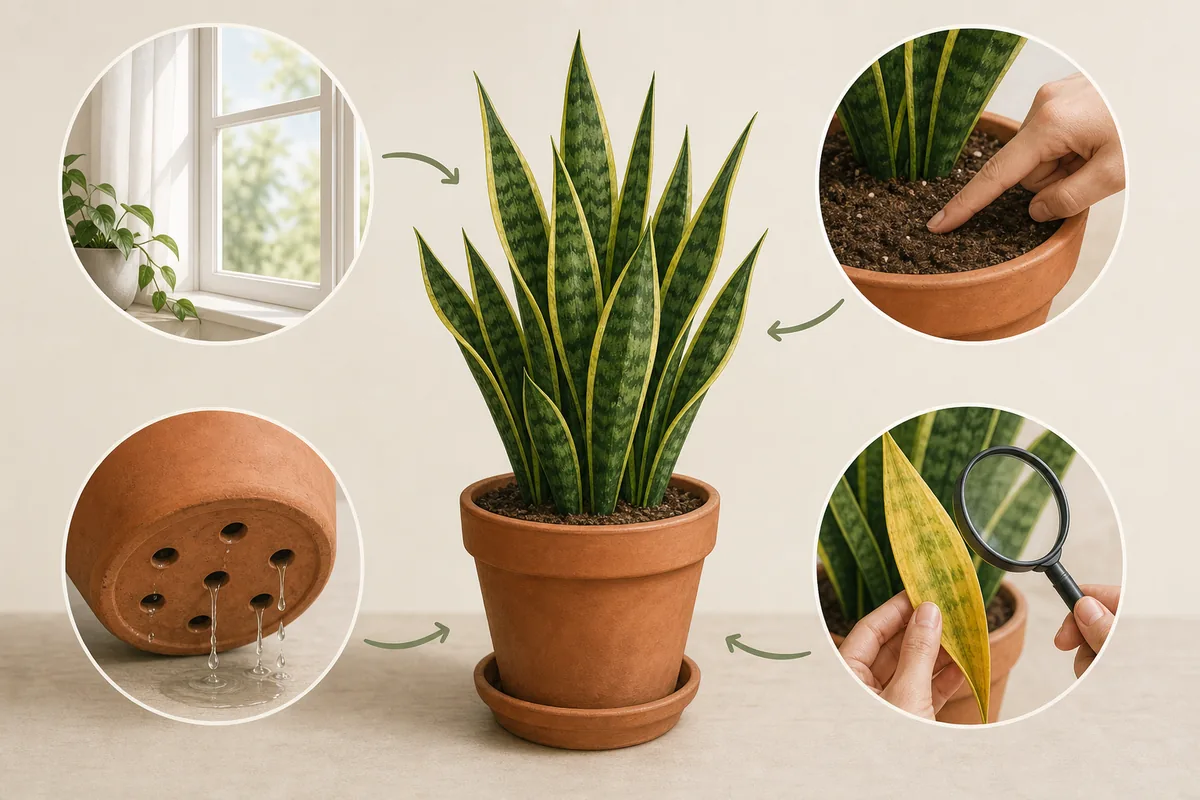
Common snake plant problems and what to do first
| Snake plant situation | Care priority | Avoid this mistake |
|---|---|---|
| Yellow leaf from the base | Check soil moisture, drainage, pot size, and root smell before fertilizing. | Watering again because yellow looks like dryness. |
| Soft mushy leaf or collapsing base | Stop watering, remove the plant from wet soil, trim rotten tissue, and repot only firm sections. | Leaving the plant in a decorative pot with no drainage. |
| Wrinkled leaves | Check whether the soil is bone dry throughout and whether roots are still alive. | Soaking a plant with dead roots without inspecting it. |
| Brown tips | Review watering swings, mineral buildup, cold drafts, and physical damage. | Cutting tips repeatedly while the cause continues. |
| No new growth | Improve light, wait for warm-season growth, and make sure the pot is not staying wet. | Overfeeding a resting or low-light plant. |
How identification helps snake plant care
A young snake plant, bird's-nest Sansevieria, cylindrical snake plant, and other stiff-leaf houseplants can be confused in quick photos. A photo-based plant identifier helps confirm the likely group before you decide whether the plant wants succulent-style care, a brighter window, or a disease check. Include the whole pot, leaf bases, and one close leaf pattern shot for a better match.
Not sure it is a snake plant?
Upload a clear photo of the leaves, base, and pot to compare likely plant matches before you change watering or repot.
Identify Your Plant